05 / 06 · TAGGRS
Server-side tagging SaaS, turned into a PLG growth machine.
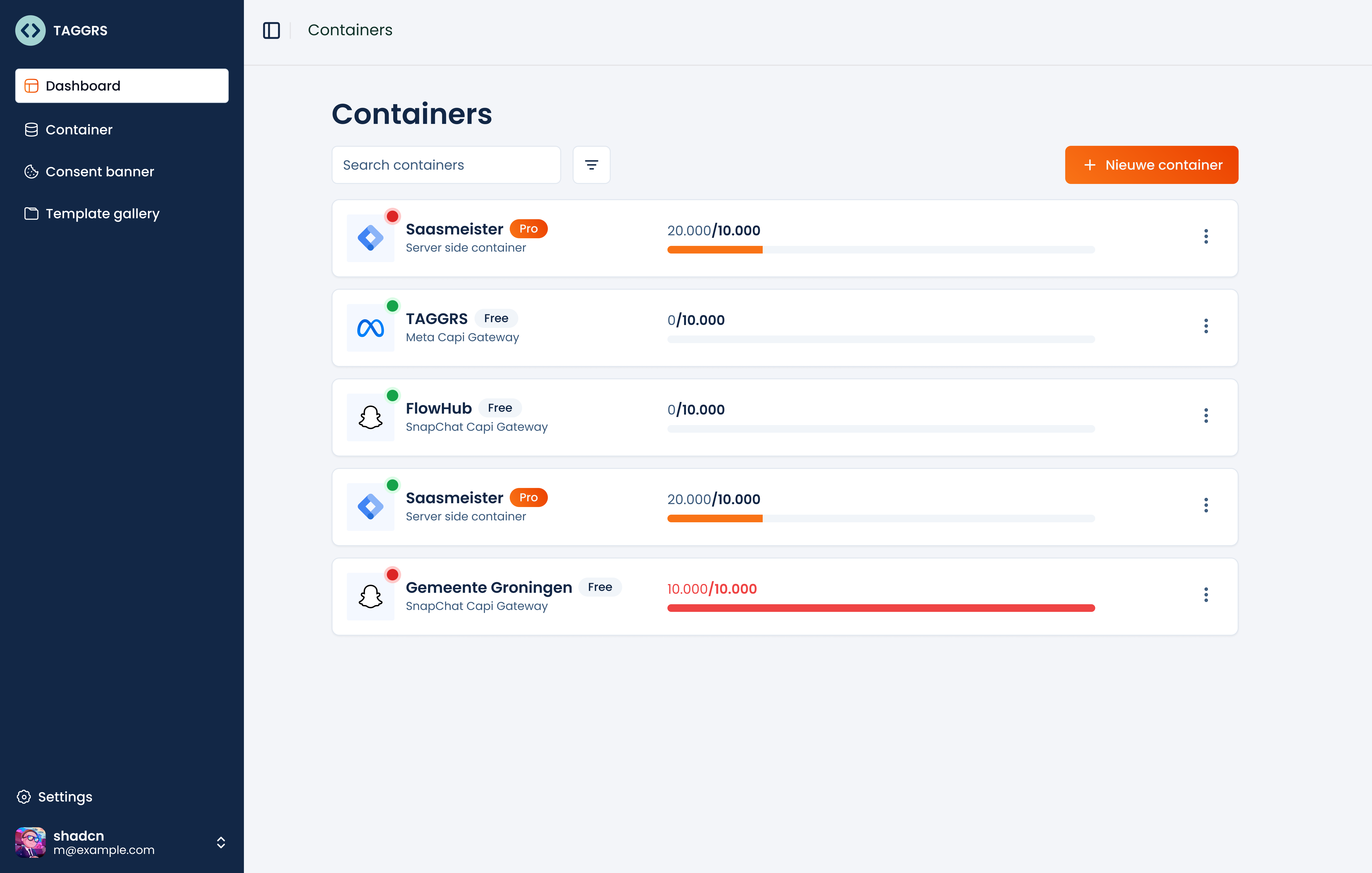
TAGGRS is the leading server-side tagging SaaS in the Netherlands - and growing fast across Europe. Strong technical product, deep MarTech expertise, real moat. After a €2M Series A round, the question shifted from "can we sell this?" to "can we scale signups without scaling sales?"
I've worked with TAGGRS since saasmeister. started. Across the engagement we've covered: app UX, website redesign, the V2 onboarding, the design system, and the email flow. The thread tying it all together: product-led growth as a design problem, not a marketing one.
The hardest constraint: server-side tagging genuinely takes time to deliver value - DNS propagation, traffic accumulation, the customer's own GTM setup. The product is brilliant; the first-value gap is structural. Most of the work was finding ways to close it anyway.
Five layers a SaaS homepage has to deliver, in order. We ran workshops with the TAGGRS team mapping every page against this. The website redesign that lifted conversion 153% is just this framework, applied stubbornly.
What is this product, in one breath? Lead with the job-to-be-done, not the feature list.
Name the problem the visitor is here to fix. Specific enough they feel seen.
Show the result, not the process. What does life look like after they sign up?
Proof. Customer logos, real numbers, security badges. Remove the "can I trust this?" friction.
Multiple low-stakes ways to start. Try it, watch a 30-second demo, book a call. Pick your speed.
Before redrawing anything, I walked through the current onboarding screen-by-screen with the TAGGRS team. Each step got a label: mission-critical or unnecessary. The "unnecessary" pile was the redesign brief.
A few of the decisions that came out of the audit: kill the confirmation email (it's a barrier, not a safety net), shorten the signup form to four fields, auto-detect language from the browser, and automate DNS validation via Entri instead of asking users to do it themselves. Each cut traced to a specific stickie on the audit board.
For TAGGRS, time-to-value is the load-bearing metric. We mapped four distinct moments the product has to earn - in order. Onboarding is judged by how fast it gets the user to win #3.
"I get the product." Signup form done, immediate feeling that this is worth the next ten minutes.
A container created. Personalised dashboard. The product feels like theirs already.
First data flowing in. The "wait a week" structural problem - solved by guiding users to install the GA4 tracking tag during onboarding instead of after.
The monthly overview lands. They see the SST uplift in their own numbers. This is the moment that converts trial to paid - and we drive everything before it toward this.
The team had been carrying a custom component library that nobody fully owned. As part of V2 we did a small but meaningful change: I picked the framework (shadcn/ui) with the engineers, then built the Figma library to match the implementation 1:1.
Tokens: orange & dark-blue as brand, turquoise as supporting accent. Poppins for headlines, Inter for body. Same names in Figma as in code. No translation layer. Velocity went up immediately - engineers stopped reverse-engineering specs from screenshots.
The library covers the dashboard, the onboarding wizard, and the marketing site. One source of truth, three surfaces.
In a self-serve SaaS, the user might log in once a week. The other six days, the product is your email sequence. I worked with TAGGRS marketing to design the in-product copy and the entire transactional flow as one surface.
Welcome to TAGGRS again. Concrete first step (container), why it matters, and three routes to help: knowledge base, support, demo.
trigger: registered AND no container after 2hPersonal nudge. No marketing copy. "I see you haven't created a container yet" - and a real way through with one CTA.
trigger: no container after 2dLast touchpoint before the auto-flow stops. Loop in the agency path here if user-type is business.
trigger: no container after 5d · final auto-nudgeSetup-stage nudge. Container exists, DNS doesn't. One-click ENTRI validation deep-link inside the email.
trigger: container created AND DNS unvalidatedThe same-day win, celebrated. Names the moment so the user knows they've succeeded. Sets up the next step (TAGGRS tracking tag).
trigger: first data receivedAfter 7 days. SST is now tracking. Tee up the first-aha moment - the data comparison vs. their old client-side setup.
trigger: TAGGRS tag NOT yet installed after 7dTracked over the first 2-4 weeks after the website + onboarding launch. TAGGRS has its own data team, these are their numbers, not mine.
TAGGRS didn't have a product problem. They had a "how do we communicate this in three seconds" problem. The 153% conversion lift came from a website that finally matched what the engineers had been building for years - not from a clever new feature.
What I'm proud of: this engagement has lasted multiple years and multiple product releases. The work compounds. The shadcn/ui design system we chose in V2 still ships every new feature today. The email sequences I wrote with marketing are still running. PLG hygiene done right is permanent.
What I'd do differently: get the time-to-first-value conversation on the table in week one. We spent months optimising every step before realising the structural ceiling was the data-propagation lag. The same-day win frame would have saved us a quarter.